Tuesday, May 30, 2017

The Truth Of Roger Rabbit


It happens instantly and never once do you question that it should. The camera pulls back from the animated short to reveal the fridge is real, the set is real, the director is real, but the birds, the birds Roger, those are wrong. And just like that we're in the world of Who Framed Roger Rabbit.  It's done so seamlessly that by the time cartoons are lifting cigars and glasses bourbon we don't even notice. When a cartoon rabbit bounces on the bed our brains register the impact wrinkles his feet cause but we don't think about it. After all, that's what happens when someone bounces on the bed. And when a hanging lamp is bumped and swings back and forth, we never stop to consider the amount of work it would have taken to get Roger colored, shaded, and lit just right in every single frame. Why should we? That how things work in the world where a human-populated Hollywood is a stone's throw (or rocketing Yosemite Sam) away from ToonTown, where all our favorite cartoons live in peaceful, copy write free happiness.

Classrooms are like the world of Roger Rabbit. Yes, we're preparing them for the real world. Yes, there are elements of reality in our classrooms, and it's as real as we can make it. But laid over all of it is an air of fiction. A classroom is an artificial environment. Even classrooms that try to avoid the artifice can't. Oh, you've set up your classroom like Starbucks? And you're saying Starbucks is laid out to be as natural as possible and not and artificial environment to make you comfortable so you spend plenty of time there and buy lots of coffee? The classroom comfort tricks can all be boiled down to making kids more comfortable, to hide the animatronic skeletons creating the unreality, to helping them buy in to the world we're helping create so they want to spend time in the world. And the more efficiently it's done, the less the kids notice, the smoother the transition from the outside world to ToonTown (there is zero chance my classroom isn't basically ToonTown in this metaphor).

How is this magic accomplished? In the movie the filmmakers planned every single interaction down to the second and smallest movement. They had no choice, the characters were painted directly onto the frames of the film. They used robots and puppets on set to manipulate objects in the real world and then had to meticulously paint over each frame, keeping in mind shading, camera movement, and eyeline. Every time a toon interacts with something live it had to happen on set. There was no CGI fixing it in post. Imagine that level of preparation to do what amounts to a magic trick. All that work to ensure the audience never sees the amount of work that went into it. When the move works best is when Roger is smashing plates over his head or zooming past a light or smashing through a window and your brain never once goes, "Wait, how..." 

In my classroom I don't want my kids to see the strings. They don't need to know the work that went into what's happening. I want them to buy in and not notice how unusual a classroom really is. It's not bad, it's hyperreal. It's more, bigger. In my class there are puppets and cardboard. I'm not trying to make it "real". Who Framed Roger Rabbit doesn't work because it's real. Who Framed Roger Rabbit, and my classroom, work because they are True. 

The elements of reality are there. We can step into the real world at any time. The things that happen in my classroom are directly tied to the real world. Lessons learned in my classroom relate to the real world. The toons can influence humanity, and humanity can influence the toons. But it works because the truth of the situations stays firmly in place. That's why you can get ridiculous and huge, because it all feels true to the world you've created. The rules work. When Eddie goes into ToonTown he survives by following the rules laid out in this utterly mad environment. Except it's not mad, not when you know the rules that govern it and make it true. Knowing the rules, using the rules, these make Eddie successful both in our world and theirs. The rules adhere to the truth of the situations.

Find the truth first and students will follow you to any world you want to create together.

If you like this post and the other posts on this blog you should know I’ve written two books about teaching- He’s the Weird Teacher and THE Teaching Text (You’re Welcome). I’ve also written one novel- The Unforgiving Road. You should check them out, I’m even better in long form. I’m also on the tweets @TheWeirdTeacher.

Saturday, May 27, 2017

What We Owe DeVos


Children deserve as many chances as we can afford to give them. Adults? Not so much. Especially ones that have the ability, potential, and whim to hurt us and those we love.

I'm speaking, of course, of Secretary of Education and anti-empathy advocate Betsy DeVos. And I'm speaking specifically to educators who are still trying to build bridges. Who are mailing her cutesy posters about what kids need and writing letters from a place of seeking understanding.

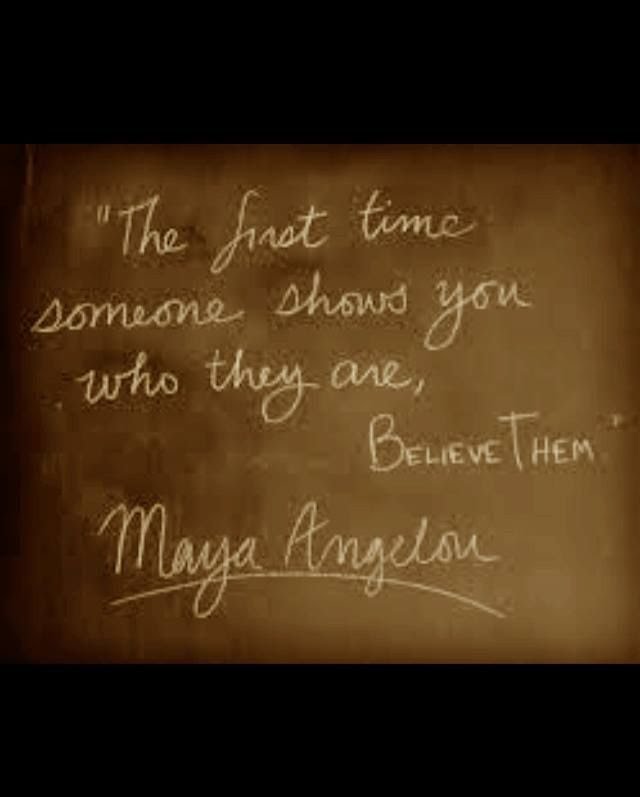
Betsy DeVos neither wants to be understood nor deserves the chance to be. Olive branches are so much kindling. The time for reaching out has passed. Good faith gestures are meaningless when the other side hates what you stand for. I'm all about trying to reach difficult kids, that's my job. But hateful, proudly ignorant adults? Who are working to tear down what I love? No. And if you're thinking, “Woah, cool it on the hateful hyoerbole, Doug. It’s a little much,” then you haven't been watching.

Mrs. DeVos appeared on the national scene not long ago. Knowing nothing of education and secure in her bubble of ignorance, Mrs. DeVos didn't even bother bluffing her way through her job interview. Oh how we laughed to hide our pain. Remember the bear memes? She wants guns on campus because her party wants guns everywhere like the Wild West that never was, and she thought we’d swallow a story about bears on campuses. A story that the school she told it about immediately debunked. Oh yeah, she also didn’t know what IDEA is or the difference between I can’t even remember now- probably science and Greek mythology. The point being not only did she give no straight answers, she also demonstrated that she didn't care. She's the student who bluffs her way through a book report by talking about the movie,only she also watched the wrong movie.  

The calls through the education sector rang out- Give her a chance. Maybe she'll learn. Maybe she won't be as bad as it seems. We could hear these people surprisingly well considering how far up their own [EDIT] how deep in the sand their heads were. And she immediately set to work spreading lies and propaganda aimed at tearing us, teachers, down. It's certainly instructive to watch the supposed head of your profession go on and on about how unmotivated, uncreative, and bad for students you are.  

Then she went before Congress again, this time to defend a budget that makes millions of dollars of cuts to programs our students need the most. And again she smiled and lied through it. Proving again that not only does she not know the details of education, she has no interest in knowing. Details get in the way of her mission. Her go-to line this time, the drum she beats when she doesn't know the song, goes, “Parent choice baddaba parent choice baddaba.” It's not a complicated song, it can't be. It needs to be simple so people who can't be bothered to look at sheet music or think about lyrics can follow along. Parent choice baddaba parent choice baddaba.

Maybe this is all just a simple ideological difference of opinion to some. A sure, if she'd stayed in Detroit, content to ruin only that city’s educational system for profit, most of us wouldn't know her. Her school choice rhetoric would be one of many drums banging in the educational wilderness. But she stepped to the front of the class. She made this so much more. And then she made her position indefensible.


The Secretary of Education for the United States of America, hired and confirmed by a GOP who want to Make America Great Again, responded to a direct question about whether or not discrimination is bad by saying, “We have to do something different than continuing a top-down, one-size-fits-all approach. States and local communities are best equipped to make decisions and framework on behalf of their students."

Her first response wasn't, “It's terrible that children would be treated that way at all, let alone by a school.” Her first instinct when asked about discrimination is to bang her drum. If you want to be cynical, you'd say it's because she’s scared to admit she believes those students deserve to be discriminated against. I choose to be cynical.

And why not? Hasn't she shown us again and again who she is? That one answer tells you everything you need to know about her and about what will happen to our kids under her watch. Think school choice is the bee's knees or not, this is a whole different universe. School choice will hurt public schools, at least done the way the proposed budget wants. Hurting public schools hurts students. But someone in charge who thinks it's ok for LGBTQ kids to be discriminated against hurts kids directly, and in fact openly encourages the hurting of those kids. By adults. By their peers. By the system in which they must exist.

There is no olive branch opening here. Don't be fooled into hoping something different is coming. It's not. She's made this clear. Betsy DeVos has no interest in dialogue. No eye for a common understanding. Just like her boss she's shown us who she is. To not be disgusted by it is to endorse it.

Our job is not to reach out to her with an open hand. Our jobs are to find ways to a) get her out as soon as possible, on a greased rail, and b) minimize the damage she can do while she clings to power. With phone calls, letters, and protests. By keeping the scales from our eyes. Don't pretend she cares. Don't pretend sending her something about how great our schools and kids are will change anything. That ship has sailed long ago. You might think me negative. You might say you'd rather have hope and see the good in people. And you'd be ignoring the evidence in front of your face. You'd say that a grown woman who’s job it is to understand every single in and out of every single education debate gets a pass when she is clueless about the simplest topics. Things you'd never give a student a pass on, the Secretary of Education of the United States gets another another another shot at. You'd be telling the teachers around you and your students that someone who can't even say the words, “Schools discriminating against students is a bad thing,” is someone that might be ok.

And students don't deserve that. 


If you like this post and the other posts on this blog you should know I’ve written two books about teaching- He’s the Weird Teacher and THE Teaching Text (You’re Welcome). I’ve also written one novel- The Unforgiving Road. You should check them out, I’m even better in long form. I’m also on the tweets @TheWeirdTeacher.

Tuesday, May 16, 2017

Generation News- a guest post by Alex Fishman

Thanks to Alexander Fishman for contributing this post, which will also act as the primer for 5/17/17's #WeirdEd. I want to spend time talking about the craven sickness which has taken over our highest levels of government and I'm working on ways to tie those issues to education in organic ways that will allow for productive conversation. Alex spoke up on twitter with the idea for this post, and I have one or two of my own cooking. We can't ignore what's happening. I want to be clear that this space won't become a political screed, but I also refuse to turn a blind eye. There will be fun and foolishness, there will be lesson plans and classroom stories, but there's also the real world and it is really impinging on my state of mind and our education system. So I could write about homework and connected educators, but that's never been me. If teachers want to claim we're preparing kids for the real world then we need to be prepared to talk about the real world in real ways. Education is political. Education is resistance.


For a couple of months in the winter a young man would arrive early to school to sit in my lab and surf the web. Well, not really surf the web. He mostly just watched YouTube. Specifically he started each day watching various news clips. He watched both the real news and comedy news, like Jon Oliver. I compared this ritual to my morning of watching comedy news while I eat breakfast, or my wife’s ritual of listening to NPR while getting ready. We all have these morning rituals of getting ourselves in the know, or just getting our minds woken up. Have these changed with generations?
Lacking the capacity to run my own study, I’ve pulled up some done by research organizations. What they find is unsurprising in that we get our news from a bunch of different sources and we mistrust the lot of them.
What may be surprising is that television still reigns but of course the habits of consuming it and other sources vary from generation to generation. It has interesting implications for the classroom to think about the teacher and student arriving having consumed news on the same topic from highly divergent sources.
The woeful inadequacy in this system was in stark relief in the last couple of years as time after time, new media exposed the brutal state sanctioned violence against black youth. I don’t know if teachers arrived to schools having read and watched news of Ferguson and other flashpoints of police brutality through their TVs, while students saw the same through Facebook, Twitter and YouTube. Research into the perception of these events is needed. Many teachers are digging into the gulf between students and themselves, or between their mostly white colleagues and their students in some great works.
In the aftermath of the murder of Mike Brown I got permission to host circles of conversation in my technology classroom. I don’t know if this was the right thing to do. If it helped any of my students, mostly students of color, cope and reflect or if it soothed only myself and the other majority white teachers. As I reflect on those conversations a couple of years removed I’m thinking about what was at the center of the circle. Not literally. There was nothing, just the empty tile floor. But I wonder, did we - teacher and student - have a shared thing that we were talking about, or where we working on the assumption that we spoke about the same America, the same Ferguson, and yet in our minds imagined two different places, two or many more than two, different narratives of race, of violence, of the state and what it is or isn’t supposed to do to people’s bodies.
This week the DOJ has released a report detailing the systemic racism of the Baltimore police department. Yet something tells me that this report will not impact the elementary school curriculum around neighborhoods, police officers, or government. It will also not impact middle school history curriculum around civil rights era. It may perhaps find its way into high school classes that deal explicitly with social justice in history. But I wonder, with systemic oppression laid so completely bare, how can we continue to teach ‘law and order’ to our students in the same ways?
Governor Rauner in Illinois has beat me to the punch here, by mandating that schools teach youth how to submit to state power. How will teachers respond? The tired excuse that conversations on power, race, and politics don’t belong in elementary classrooms is a lie in light of this move to explicitly train our youth into oppression.
As teachers we are constantly chasing educational trends.  From multiple intelligences to hyperdocs, teachers are looking for that edge. We attend conferences and webinars to find that cool new app, that next awesome thing, that insight to make us and our classes even better. We implore one another to teach like pirates, like explorers, like innovators, like engineers, like the latest and most expansive acronyms [see evolution of STEM to STEAM to STREAM]. But if we adventure in the service of the oppressive state as Rauner’s bill implores us to do, we aren’t pirates or adventurers or creatives, we are mercenaries.

Tuesday, May 9, 2017

Boxing Creativity

Black and White Reeds Reflected In Water, Swirly Patterns
by Robert Greshoff

There is a major difference between telling someone they can be creative and telling someone how to be creative.

I'm firmly in the Everyone Is Creative camp. I don't even mean that with the qualifier, "Until it's beaten out of them by school/work/life/the Trunchbull." I mean every single person on Earth, and everyone living in the secret moon base established by NASA in the '70s, has the innate ability to be creative.

And every one of us uses that ability on a regular basis.

"But Doug," I hear you say. "I'm not creative. I can't write stories or songs, draw, paint, sculpt, make movies. I'm not creative." To paraphrase the great philosopher Morissette, isn't it ironic, don't you think, that we won't get creative with the meaning of creativity? How strange is it that so many of us have a strict view of what creativity is and what it can be. Do you dress blandly? Do you only make toast and water? Do you only follow, pace for pace, in the footsteps of others? Are you boring in bed?

Creativity comes in all forms. If you plan something with meticulous detail, isn't that a form of creativity? I dare you to tell a mathematician that math isn't a creative pursuit. Certainly we'd never tell a scientist they aren't creative. Programming? The inspiration you feel when making a shopping list. Creativity bends like reeds in the water. Creativity is the water, changing shape to fit the container in which it's held, sometimes calm and smooth, sometimes raging and powerful. Sometimes carrying you and sometimes drowning you.

Everyone is creative.

I believe we want to be creative. We, in this context, being educators. I know I'm a Pollyanna about this and there's plenty of people who would grumble that not everyone wants to be creative. Something something testing something worksheets something. To which I snark that they're being awfully creative in their excuses about not being creative, and I'd realistically say, "Hey, there's always a 'some people' for anything." Moreover, I believe that those honestly uninterested in being educationally creative make up a minute portion of the population. Again, maybe I'm a Pollyanna. Or maybe others are overly negative to make any creativity seem special. Let's go with my theory that most of us actually want to be creative. If that's the case, why don't more teachers feel creative? Why do we chase people who are seen as Creative like rats chasing the Pied Piper?

Sometimes we need permission to feel how we feel.

I've done therapy. A lot of it, in my case, was finding ways to accept feelings and move past them. Getting permission to forgive myself, getting permission to move forward. Stop running from the emotion, or blocking it, and feel it. Use it.

I believe many teachers are looking for permission to be creative. This isn't a character flaw. Not everyone is the kind of person who wants to jump first, and that's fine. They just want to be told that it's ok to play. "No really, go. It'll be fine." Give that little nod and off they go. Just as we want our students to find themselves in the work, but they hesitate because they've learned to play School, so have many teachers. We play School well, and we need permission to play in school instead.

It's a muscle, though. Gotta use it. Creativity doesn't just happen. A watery tart isn't going to hurl a sword of creative thought at you and make you king. You gotta work for it. Keeping this in the teaching space, those first lessons where you really try to stretch your wings will be tough. Don't compare them to others. You'd never run your first 10k and compare your time to the person running her 50th. You're competing against you only. You're making forward movement. You have permission to move forward and find your unique creative voice at your pace.

I was a theater minor in college. Theater people are, in general, a little (read: a lot) more emotive than most other people. One of my favorite teachers ever, Jeff Ingman, who I mention in my first book, explained it this way- Think of your emotional life like a child. We (especially men) are trained by society that when an emotion comes out to smack it back. If every time a child came forward with an idea you shut the child down, it would not be long before that child closed up. Soon you've trained your emotions to be muted. As an actor, that's the opposite of what you need. So actors let emotions flow off stage in order to have access to them on stage. This, like so many other lessons Jeff taught me, connects directly to teaching with almost no conversion.

I believe that environment plays a big part in mindset as well. Immersing yourself in creative things outside of the classroom will help train your brain to think creatively inside it. We are a whole, you cannot compartmentalize who you are and who you are as a teacher. It's all you. Listening to challenging music (my go-tos are Zappa, Waits, Rush, and extreme stuff that I'm not sure I like the first three times I listen to it) watching off-center movies (watch CLOUD ATLAS), reading odd books (there's too many to name, but Clockwork Orange is a good place to start), these mess up the brain in the best way. Not knowing if I like something on the first two or three passes is a good signal that I'm stretching myself. Even if it turns out, no I don't actually like it, I tried something new, something hard. That impacts the classroom. It inspires.

I don't like it when people claim they can show you how to be creative. "Here's how to creatively use x." Ugh. This is the opposite of creative. This is the speaker being creative and the audience's job is to impressed by their creativity. Mike Ritzius put it best, "Here's how I'm creative with... > Here's how to be creative with." I can give examples of the things I've done, but they're not to copy. They're to use as jumping off points.

Here's my best advice to start thinking creatively- See your first instinct, that first idea. Look at it, know that it's there if it's needed, then throw it off to the side, bend it, or break it. It's a draft. Use the second or third or fourth idea instead. Don't be worried they won't come, they will. And if they don't you've still got that first draft. In working with my student teacher, which forces me to be more reflective, I realize that I'm doing this without thinking about it all the time. I treat ideas like Lego pieces. "Here's the main brick. Let's add movement to it. That'll go here. No, here. Can I add tech? Hmm, here? no. Here? No. Not gonna work with this. But maybe it will fit on this other idea." Think about it like a flow chart if that works better in your brain.

I like this because it creates freedom. It forces it. It also creates lessons that burn down, fall over, and then sink into the swamp. That's when you build another lesson on top of the fallen one, and that one stays up. Hopefully. Or you get to build another.

AND, because model model model what we do in the classroom, I articulate this process when I can. I let my kids hear me think. I say "let" like I've got a choice, like I don't have to talk out loud through my thinking because how do I know what I think unless I write it down or hear myself say it?

There's other factors to consider. Does your admin encourage creative experimentation? If not then there's the added challenge of being creative under even tighter constraints. It can still be done. I have to be positive about this. I have to see the bright side. I've working for restrictive administrations and I hated it and chafed against it and still found ways around their bone-headedness inside my room because it's my room and they're my kids and I dare you to come in, see them enjoying learning, and tell me to stop. Same with the prescribed curriculum. There's margins to play in. There's always holes in the system. Make a goal finding and exploiting them. Easier said than done, but it can be done. Use every tool. If the school is paying for it and I don't like the way it's presented, I bet I can break it and use the pieces.

You are allowed to stretch your wings and fly. You're allowed to sing all the songs until you find your voice. You're allowed to suck until you don't. We are allowed to find our creativity, and use it. We are allowed to expand the definition of creativity until it encompasses everything, because boxed creativity is its anathema.


If you like this post and the other posts on this blog you should know I’ve written two books about teaching- He’s the Weird Teacher and THE Teaching Text (You’re Welcome). I’ve also written one novel- The Unforgiving Road. You should check them out, I’m even better in long form. I’m also on the tweets @TheWeirdTeacher.

Tuesday, May 2, 2017

The Worst Thing About Fidget Spinners

A post shared by Doug Robertson (@theweirdteacher) on
Ah yes, fidget spinners. The scourge of classrooms across the nation. From their bearings have spun dozens of thinkpieces proclaiming them the devil in spinnate.*

You know what the worst part of fidget spinners is?

That they are just one more thing that exposes how ill-equipped teachers can be to deal with things that are a little bit irritating, and how we love to burn down the house to kill a few bugs.

Let's get the basics out of the way for the four people who haven't noticed these things in the hands of their children- a fidget spinner is the cheaper cousin of the fidget cube. It's normally a triangular shape with one bearing in the center and one on each edge. The person fidgeting with it grips the center between two fingers and, ideally, uses the other fingers on the same hand to spin the spinner. Thus keeping busy hands busy, but minds on the task at hand.

The main complaint about these harbingers of classroom disaster is that they are becoming toys. "Yes, some, a few, a couple of students need them, sure. But most of my kids are just using them as toys." The secondary complaints are that they are causing fights and theft. And a tertiary complaint is that the soft hum the spinners make becomes nails-on-chalkboard irritating at some point.

So it's good for one kid, but a toy for another. Sounds like an iPad to me. Or a mechanical pencil. You know, one of those things that all the kids can use, but most need to be trained to use properly? Don't scoff about the mechanical pencil getting lumped in here either. I was a student. I know exactly how much time can be wasted by being completely absorbed in being sure the lead is in the pencil just exactly right. With no breaks. If there's a break- start over. Gotta get that eraser on just right too. Did you know that if you unscrew the pointy end there's a spring to play with? Total distraction, I can't believe parents are sending them with their kids. Why can't the kid just use a normal pencil?

Oh, the parent reason, which give rise to the parent complaint. I do like that one. I've heard it too. "My mom said it'll help me focus." I've got two choices here. I could go straight Trunchbull on the child, like so-
Different kind of spinner, this.
OR, I could nod and smile and repeat what I said about the proper way to use the tool- One hand, on or near your desk, eyes on your work, not on the spinner.

If I really wanted to get snarky, I'd respond to the complaints that the spinners are distracting toys by asking why the work the students are being given is so disengaging that they're being distracted by a three dollar piece of plastic. But that would require me to think about the fact that I've seen my own students, on occasion, be distracted from my incredibly engaging assignments by the same three dollar piece of plastic. So I won't bring that up at all. If I wanted to reflect I'd buy a mirror.

Or I'd notice it in my own classroom, realize that's a thing kids do, and redirect them. Then wonder what's up with the assignment I thought was so cool. That's also an option.

As for the theft and fights- this seems like a much bigger problem. It assumes that prior to the fidget spinners being delivered straight from Hades' workshop to the classroom door there was no theft, no fights. The classroom was Eden and the spinners are the apple. Or the serpent? But to carry this metaphor forward that would make the dress code...hrm. Anyway, the point is if it were my class, I'd wonder what else was being stolen, what else was causing fights, and where the roots of these much bigger problems were. Where's the breakdown in my class community, because it's probably not the Hot New Thing. That's just what's bringing it to the surface.

The point in all of this is- aren't they supplying teachable moments left and right? If they are an issue, that's a chance for me as the teacher and us as my class and I to think about why. To talk about tools and choices. I have also used these conversations to connect with my students. I constantly have something in my hands. I have a yard stick I've never measured anything with and I keep empty tape rolls in my pocket. At the very least I've got a pen/drum stick in my hand. My kids see that. But most of them never noticed it until I pointed it out. Because I was still getting the work done. See kids, it can be done! Modelling, it turns out, is a viable instructional strategy.

It's not like any of this is new, either. Sure, this particular fad is being marketed as an instructional aid, but it kinda is for more kids than we might admit. Still not a new thing. I was in school for The Great Snap Bracelet Plague of the late '80s. I remember The Pog Boom of the mid 90s. The Tamagotchi Migration of the late 90s? I survived that too (though my tamagotchi never did). For those readers who were in school in the BeforeTimes it was what- Jacks? Hoop and stick? Whitewashing fences? Imagine being a teacher during those times. Some of you don't have to. I can just picture the grinding of teeth and rending of shirts about snap bracelets. Did your school ban them? I think mine might have.

Ah, banning things. Because nothing keeps kids from doing something like telling them not to do it. That's why abstinence only education works so well. It's why none of my ten- and eleven-year old students have Facebook, Instagram, or YouTube pages- the age gate! It's why those classrooms where teachers take cell phones away and strictly limit what students talk about are such bright and shiny places. There's nothing like announcing, "We are banning fidget spinners!" to make yourself sound like a grown-up who is in control.

Are they a pain? Sure, they can be. I've got 36 students and probably a third to a half of them have a spinner. I've got one kid who has a spinner with LED lights in it, because why wouldn't the company do their best to turn me against them? And we've had a couple of talks now about the proper use. One hand, down low, not on your nose or your desk or in your friend's hair, keep working. Do that and we're good. Fail to do that and it becomes a toy and you can't have toys in school, so it'll be mine until the end of the day. These rules, by the way, are almost the same as my Bring Your Own Device rules. It's a tool, it's cool, it's a toy, say bye.

As for the noise thing, I've only noticed it when kids are getting those RPMs up real high. But I listen to my music too loud so my hearing might not be what yours is. In which case we revert to the basics of freedom- I'm good with you doing it until it interferes with someone else's happiness or freedom. If your neighbor says the hum is annoying, let's figure out a way to fix that.

I have seen teachers taking advantage of the fad and having their kids make spinners. Think of that, taking something the kids are naturally interested in and bringing it into the classroom. Making them Maker challenges. Using them to create design, inertia, and friction lessons. It's like the PokemonGo EDU thing except actually useful.

I know I've been pretty snarky and hard on those who are piling on about the spinners, but that's only because I feel like we've got bigger fish to fry. At least, if you're teaching a home ec class.** There are major educational issues out there for us to be bringing attention to, let's stop giving publications "Teachers Are Complaining About Small Thing X" to write about. Pay, benefits, whatever the hell DeVos thinks she's doing, racial inequality, testing, equity, trauma-informed practices, project-based learning, edtech- all of these things should be getting digital ink. But we're letting the focus get pulled because we're pulling it.

A fidget spinner isn't a distraction to learning. Getting obsessed and stressed by a fad that'll be over before the school year ends is.

*an article complaining about how terrible some thing The Kids are into is the easiest thing in the world to write (aside from a list posing as an article), and the two or three Fidget Spinner Are Evil articles I've seen are so boring and predictable. Come on. Don't give them the clicks. Make them publish good content. 

**do they fry fish in home ec? I never took it. Cliches are dumb.


If you like this post and the other posts on this blog you should know I’ve written two books about teaching- He’s the Weird Teacher and THE Teaching Text (You’re Welcome). I’ve also written one novel- The Unforgiving Road. You should check them out, I’m even better in long form. I’m also on the tweets @TheWeirdTeacher.
Wednesday, April 26, 2017

Tom Riddle and Anakin Skywalker- A Study of Students

Gifted beyond their years. Driven to be the best in their fields. Attentive, questioning, creative, full of mischief and just enough of an anti-establishment streak to make them interesting.

Tom Riddle and Anakin Skywalker sound like the kind of students we want in our classrooms.

Skywalker might have been a little too emotional at times, but the relationship he formed with his teacher allowed them both to accomplish incredible things. Obi Wan was there when his teacher, Qui-Gon Jinn, saved Anakin. Plucked him, in the best tradition of Teacher-As-Savior, from poverty and strife and brought him to the best school he could. Sure, Master Yoda wasn't keen on letting the kid in, but damnit, Qui-Gon is a teacher and teachers fight for what is best for our students. His gamble paid off too. Anakin was driven by something deep inside to progress as fast as he could. His methods weren't always what Obi Wan expected, and he stumbled often. That's how we learn though, and each failure drove him harder. When a teacher gives a student an assignment and that student completes it in a completely unexpected way that still accomplishes the goal, that's when you know real deep learning has taken place. Anakin Skywalker wasn't always an easy student, but he was one hell of a learner.

Tom Riddle was also saved by a teacher. Dumbledore knew the boy was troubled, but that made the challenge all the sweeter. Riddle was proof that extreme talent could come from anywhere, and it would be a terrible thing to let that talent fall through the cracks. He read further and deeper than his classmates, and on topics that his teachers hadn't yet assigned. He disrupted the education process and differentiated it for himself. A self-driven learner, he found passions and pursued them, using teachers when needed. He became the ultimate student. That drive was a little unnerving, and he tended to look a little too deeply at you, but there was such intelligence in there. Irresistible to a teacher.

The signs were all there for Obi Wan and Dumbledore to see. The seeds of who these two could become. So they taught with love and understanding, giving of themselves and providing all the experiences they could. It wasn't enough.

Can Obi Wan and Dumbledore be held in account for the rise of Darth Vader or Lord Voldemort? They were both warned, Obi Wan by Yoda and Dumbledore by his very first conversation with Riddle. Without them neither of the boys would have grown into men that brought entire cultures to their knees. It's not their faults, surely, but they did educate the boys. A teacher can't control what a student does with the knowledge they are led to. The other half of our job, certainly of Dumbledore and Obi Wan's job, was teaching the responsibility that comes with such power. After all, with great power, comes- wait, sorry, that's jumping into a third universe, and that's just too much.

It's reasonable to say that Dumbledore and Obi Wan did everything right, as far as they could. Anakin and Tom were unknown talents. How can you not help that talent grow and be a little blinded by the light of it? In that blinding light, Anakin was drawn away from his teacher by another, who promised to move him along faster, help him reach greater heights. Obi Wan preached patience, and Anakin didn't have it in him. He was impetuous and strong-willed. So he abandoned his teacher. Tom used his teachers, taking all the information he could from them, providing one of those marvelous teaching opportunities to go above and beyond the prescribed curriculum. And he used that knowledge in new, creative ways! What joy, to see learning become assimilated, synthesized, and used for the creation of new knowledge. His flaws were, due to the rules of genre, within himself the whole time. There was no saving Tom Riddle. Without Dumbledore he would have wreaked havoc on some scale as he gained control of his powers. Dumbledore just gave him to keys to the castle, as it were. Riddle's fatal flaw was hubris, he thought he knew it all and so was undercut by old knowledge he should have found but didn't think was important. And then again, at the end, hubris undid him when he thought he had all the pieces to a puzzle but had one significant Draco-shaped one wrong. By then he was unable to think his way around the problem. There's the key-

Darth Vader's famous line when confronting Obi Wan is, "When I left you, I was but the learner. Now I am the master." And that's after he kills a classroom full of kids. Voldemort sees Dumbledore as an "old man" and literally destroys a school. Maybe their final turn was only made possible when they stopped being learners and believed themselves to know it all. Lord and Master- doesn't sound like learners.

We come back, then, to their teachers. Dumbledore continued on. He kept teaching, kept raising the next generation of wizards, perhaps to keep an eye on those who's power was growing under him? Obi Wan ran. So did Yoda. There were other reasons, but they didn't teach again until a student came to them, asking to be taught. And it looks like this is a lesson their next student learned as well.

What can we do as teachers but teach to the best of what's inside our students? With knowledge we also impart the human element. As much as relationships are the sugar than helps the medicine go down, they're also the bonding agent that connects the knowledge to the wider world. Would Dumbledore have done something differently if he'd have known for certain who Tom Riddle would become? Would Obi Wan have? That's not the way of a teacher. They'd have heard the warning, then redoubled their efforts, because teachers don't give up on their students.

Teaching is a long game, and uncertain. Both Dumbledore and Obi Wan were able to atone for their teaching mistakes, they each trained the one who took down their students who'd gone wrong. Maybe, then, this is a post about learning from failure, even great failure. How a teacher can reflect, and use the future, the long game of education, to eventually soothe the mistakes of the past.


Or maybe it's if you really screw up a class you can always train next year's class to kill them. Might be that too.


If you like this post and the other posts on this blog you should know I’ve written two books about teaching- He’s the Weird Teacher and THE Teaching Text (You’re Welcome). I’ve also written one novel- The Unforgiving Road. You should check them out, I’m even better in long form. I’m also on the tweets @TheWeirdTeacher.

Tuesday, April 18, 2017

Hand v Stick: Choice of Justice


Pulling sticks. Calling on hands. Calling on everyone. A Wheel of Fate. How to be sure we're giving all students a chance to answer while not putting students on the spot? Where's the line between checking understanding, checking attention, and calling attention to an embarrassed student? This is one of those Education Debates (tm) that everyone has an opinion on, and some would fight to their last breath to defend their side, waving research both data-driven and anecdotal. Like many Education Debates (tm) I don't have a strong side. Never be hardline about anything, except not being hardline about anything. Teaching requires too much flexibility to ever put your foot down too hard.*

That said, this feels like there should be an answer. Which, I think, is a fallacy. We aren't Stephen Colbert, we don't have to think with our feelings. We should dig in.

One of the things my student teacher is working on this year is being sure she's calling on a wide variety of our kids. She realized on her own very quickly that it's always the same five kids with their hands up, and that there are some more than willing to never say a word all day, and still more who would speak up but figure that other kid has the answer. In our conversations we set a goal for her that she'd be better at mixing it up. To help demonstrate to her what I was seeing I printed a class list and put a check next to names every time they spoke over an entire lesson block. At the end a few had four or five checks and many, too many, had not even one. Nothing like making a point concrete. Veronica is a great student, as well as being a great student teacher, and she took this to heart without taking it to ego and immediately worked on correcting the issue. I mentor teach a lot like I teach teach, which means I helped her see the issue and then asked her to fix it in a way she thought would work, and then together we would massage and fine tune. In this way she finds her own solutions and, next year when she has her own class, she has the tools to troubleshoot those things that come up that aren't in any university course.

I will mention that her university, um, supervisor (?), during her observations, has noted the same thing- that she was calling on too many kids with hands up. This, I think, speaks to a deeper issue. We'll get there, keep your comments holstered.

Her solution was to keep a running record for herself on the board as she calls on students. Every time she calls on a student she quickly writes that student's name down. This visual aid lets her see when she's overusing one student and missing another.

I am not thrilled with this solution, and when we talked about it after school it took me some time to articulate why. Watching her do it I was happy she'd found a solution, but I wasn't happy with the solution she'd chosen. It's inelegant for certain. It takes a precious second or two of her concentration every time a student speaks. But I'm also not upset with it. It does solve the problem, and it has been helping. We both recognize that it's a first step to a better way and not a habit she wants to build. In her defense, and I feel like I use this excuse a lot but it's a Truth this year, we've got 36 kids. That's a lot to keep track of for me in in my eleventh year. Remember your student teacher year, when you didn't have all your Teacher Senses yet? When you were still having to think about All The Things rather than have them running as subroutines while you focused on the important stuff? Writing names is a starting point, and starting points are good. You can build from starting points. But build to where?

We sat and hashed it out. I believe that mentor teaching is conversing, not commanding. We're in this together. What follows is the basic shape of our conversation as it snaked naturally through the following points. We both know that using hands is bad. That's a perfect way to never hear from at least a third of the class. But she's also conscious of making the kids self-conscious. So calling on students who don't have their hands up might backfire. On the other hand (get it?), we have students who aren't paying attention and might calling on them like that remind them to be on the stick? But that's using public embarrassment as a motivator and that's not what we're about. So we give think time, which is important and another thing new teachers either forget or underestimate the length of because you're thinking faster than the clock is moving and not realizing the kids aren't as keyed up on coffee and adrenaline as you are.

But what to do after think time? Three choices- move to turn and talk, circulate and let kids know they'll be chiming in with their answer when we come back as a group, or a combination of the two. Turn and talk is good because then even if the student isn't talking to the whole group they're talking to someone. The warning that they're going to be called on is good because that gives the student a chance to collect their thoughts. And the combination is good because it gives the student a chance to collect their thoughts and the thoughts of the students around them.

But then who do you call on? Just the kids you told you'd be calling on. Anyone who doesn't get to share out gets to turn and tell the person next to them what they were going to say for five seconds, because you know you've got those kids that will just explode if they don't get to share out to someone. That values everyone's voice, doesn't it? Or call on every hand? Sometimes calling on hands is ok, isn't it? Let everyone share? But that takes a long time in a normal sized classroom. And if they're dying to share out specifically to the Teacher than says more that they're trying to please us and less that they're trying to learn, doesn't it?

So we move to a Random Student Chooser. Names or numbers on sticks in a cup. Pull a stick and if your name comes out of the cup you come up with an answer. I used this for a long time. I stopped because it stopped working for me like I wanted, and I didn't like kids freezing up, but it's not a bad option when you're still building your tool belt. Still, then it puts students on the spot who might not have an answer and we don't want to embarrass kids. If the student doesn't know the teacher response might be, "You can ask a friend." Then that friend tells the original student and the original student tells you.

The problem with all of these is they're Teacher Centered. All of these assume the teacher in the front of the room lecturing and the students seated and listening. Not ideal. Sometimes needed, occasionally useful, but not ideal. There's always technology that allows everyone to share, valuing student voice, allowing student conversation, putting the onus on them rather than us. Sites and tools like Back-channels, Padlet, and TodaysMeet. Even the quiet students get in the game that way. But that requires everyone to have access to tech. Not a reality for us, not yet. *looks wistfully into the middle distance*  Someday though.

The best option is to have everything be student-centered all the time, with little teacher talk and little whole group discussion. But whole group can have value. There's no reason to throw something completely away because it only works some of the time. That means you have a tool in your belt that works some of the time! Differentiation means keeping those Sometimes things.

All of this brought our conversation (remember, the framing device for the last few paragraphs has been a discussion between my student teacher and me) all the way around to the big idea of- We Need A Mix Of Things. Which is at the heart of what I believe about teaching. If we're going to hold tight to the war cry that students aren't standardized then neither should teaching styles be. Sometime lecture is good, sometimes group work, sometimes tech, sometimes a worksheet isn't the devil (if it's well written, yeah I said it), sometimes a project or a build is better, sometimes quietly reading out the book will be just what a kid needs. Might need to get those textbooks out of the ditch for that last one. They aren't all bad. Again, especially if you're a new teacher building your world as you go. And yes, I'm leaving all those that vague because I don't know your kids, I don't know your curriculum, and I don't know your style. I just know that more options are better than less and experimentation is good.

So we'll mix it up. We'll build a Wheel Decide with kids' names. We'll have a Cup o' Destiny full of sticks. We'll have turn and talk and "hey, you're up next" and "Who knows this". And we'll have lots and lots of kids talking to kids explaining things to kids. We will make our classroom a place where it's safe to speak up, safe to try, safe to share, and safe to sometimes stay quiet and watch.

Remember sixteen hundred words ago when I mentioned her university supervisor noting that she was calling on too many hands? That means that the teacher-centered model is still at the forefront of at least one teacher education program. If it wasn't then her comment wouldn't have been, "You need to move away from calling on students with their hands up." It would have been, "You're talking too much." My personal theory is that Teaching is easier to teach in a university classroom than the more complicated and involved student-centered model. It's also a case of How We've Always Done, and I don't know if you've seen the memes, but rumor is that's no excuse to keep doing that way. But redesigning how teacher education is done is a blog (book) for another time.

I honestly don't know if this is the best way, and I know I'm missing other options. I'm hoping that the comment section gets used to explore other ideas and techniques. This is one of the benefits of being a mentor teacher, to be honest- I'm forced to question and justify my own practice and occasionally I don't have a great answer.

*except guns in schools for "protection". That's the dumbest idea on Earth and I'll argue against it until one of us starves to death, and then I'll become one of those ghosts that you can hear in the winds and creaks of doors, still arguing about what a stupid idea it is.


If you like this post and the other posts on this blog you should know I’ve written two books about teaching- He’s the Weird Teacher and THE Teaching Text (You’re Welcome). I’ve also written one novel- The Unforgiving Road. You should check them out, I’m even better in long form. I’m also on the tweets @TheWeirdTeacher.